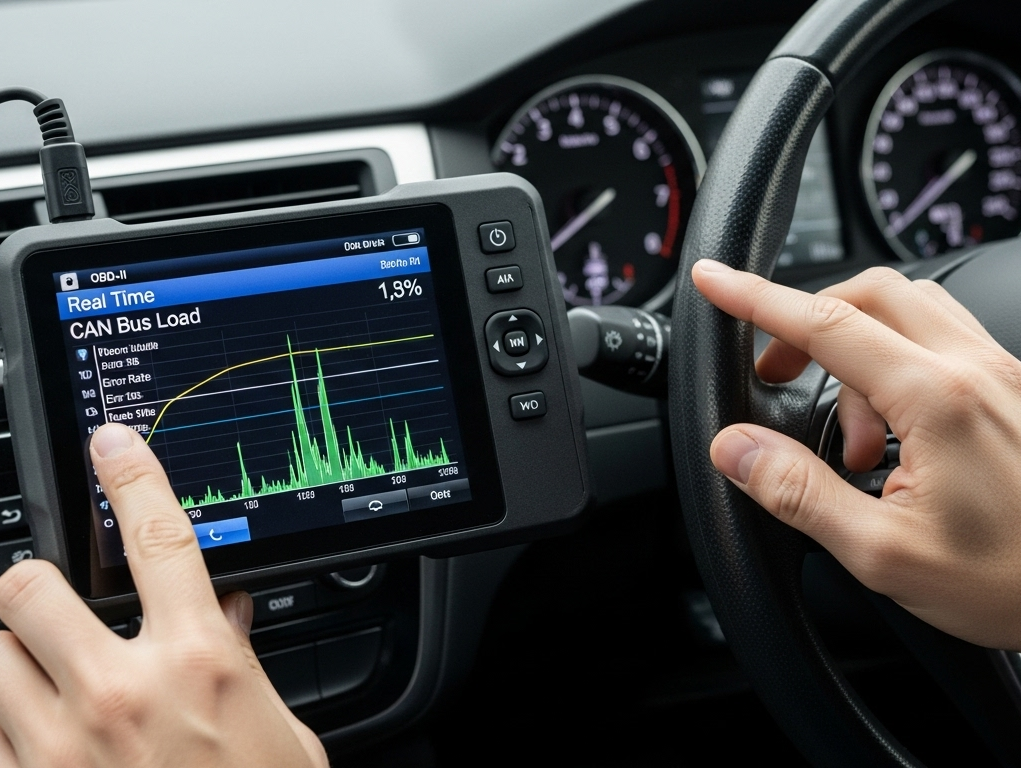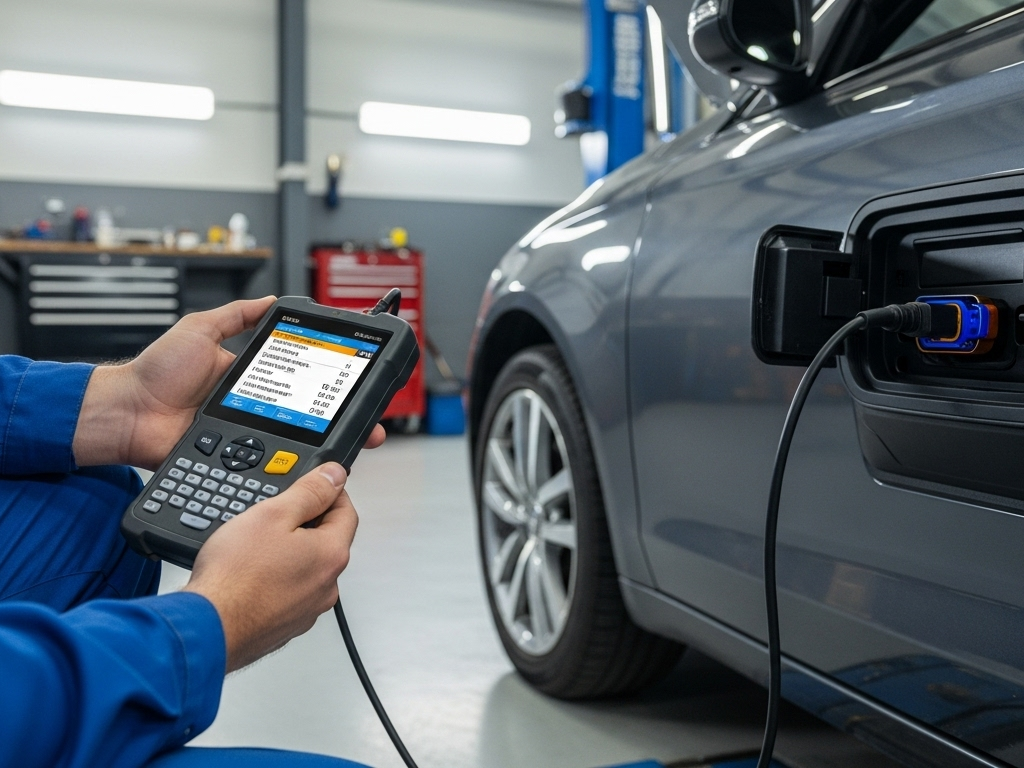
Kicking off
A escalating subtlety found in contemporary cars necessitates a complete careful perception of diagnostic methods, ordinarily regarding On-Board Diagnostics II (OBD2) and Tire Pressure Monitoring Equipment (TPMS). Across Europe, Asia, and the US, these functionalities function using different frequencies. OBD2 standards are largely unified globally, mainly utilizing ISO 9141-50, KWP2000, CAN, and others, but regional applications can present minor variations. TPMS, however, is where notable frequency differences occur. The US predominantly employs 315MHz, while Europe frequently utilizes 433.92MHz, and Asia demonstrates a more fragmented range including both frequencies and ancillary bands. So, reliable diagnostic apparatus must be provided with the potential to decode these multiple frequencies to promote effective maintenance and maintenance.
Unpacking TPMS Sensor Frequencies: A Global Guide (Europe, North America, Asia)
Knowing tire pressure watching instrument (TPMS) receiver signals across the realm proves to be intricate. Usually, North America largely utilize 315 MHz, nevertheless some modern vehicles employ 433 MHz. Nonetheless, Europe and most of Asia largely work on the 433 MHz frequency, with some country-specific variations manifesting mainly in certain Asian states. Hence, vital to ascertain the right band leading up to obtaining TPMS transmitters to warrant match and avoid feasible problems.
Battery Car Readers: OBD2 Compatibility and TPMS Integration
Cutting-edge electrical vehicle inspection gadgets are increasingly featuring indispensable functionality, especially regarding both customary On-Board Diagnostics II (OBD2) compatibility and Tire Pressure Monitoring System (TPMS) union. Many eco-friendly cars utilize OBD2 ports for fetching vital system statistics, letting technicians and operators to locate possible defects. Furthermore, integrated TPMS combination provides valid tire tension reports, assisting to amplified safeguarding and power performance. This combination of OBD2 interfaces and TPMS deployment represents a substantial enhancement in EV automobile evaluation.
TPMS Frequency Discrepancies: Continental Europe vs. North America vs. Asia-Pacific - A Extensive Assessment
These mechanisms responsible for supervising tire stress—TPMS—operate on separate radio spectrum, leading to major regional discrepancies. North America predominantly utilizes 315 MHz, though some modern vehicles are shifting to 433 MHz. Eurozone mandates 433.92 MHz, a fixed frequency to ensure consistency across regions. Eastern Asia exhibits a complicated landscape, with some nations using 315 MHz, others 433 MHz, and still some places employing a amalgamation of both. This distinction brings challenges for tire shops and vehicle owners when dealing with replacement TPMS devices or diagnostic apparatus, obliging careful inspection of regional guidelines to circumvent errors and establish proper usability of the TPMS.
Auto Scanners for Battery-Powered Cars: Tire Pressure Monitoring System Review & Radio Wave Understanding
Cutting-edge automotive readers are quickly growing to handle battery cars, especially regarding tire information analysis. Unlike ICE vehicles, EVs present exclusive hurdles when it comes to air pressure management verification. Many electric rides use diverse tire sensor platforms signals requiring the scanner to unerringly process the wavelength in use. This functionality provides experts to merely view pressure metrics but also discover the accurate radio signal being beamed by the sensor array devices, aiding in sound assessment of faults.
Asia TPMS Spectrum: What Need Learn?
Decoding the world of transport TPMS can be a problem, primarily due to the varying wavelengths utilized across Continental Europe, Asia, and the United States. European Union’s vehicles predominantly use 433.92 MHz, while various Asian countries employ 315 MHz and 433.92 MHz, creating a troublesome situation for engineers. In the US, both 315 MHz and 433.92 MHz are prevalent, with 315 MHz being more dominant. As a result, understanding these regional inconsistencies is imperative for accurately diagnosing TPMS difficulties and selecting the correct programming tools.
Progressing a Key Concepts: On-Board Diagnostics II, Renewable-Powered Autos, in addition to Tire Monitoring Apparatus Rate Deciphering
For skilled ride specialists, solely knowing this crucial elements about vehicle data, electric automobile mechanisms, but tire surveillance transmitter rate detecting signifies some significant next level. The aforementioned themes go through primal approaches, necessitating specific devices as well as knowledge to be able to exactly detect combined with solve intricate challenges regarding vehicle wheel levels, energy source system operation, even motor failure notifications. Also, efficiently spotting TPMS sensor signal rates – that are differ for specific brands even trim levels – often necessary for proper synchronization.
EV Diagnosis: Using OBD2 Scanners to Troubleshoot TPMS
Diagnosing Tire Pressure Monitoring Systems tire pressure systems in electric vehicles electric cars often necessitates more than just visual inspection. Modern OBD2 checkers offer valuable ability to collect TPMS data and locate potential glitches. Utilizing these tools, technicians can view fault codes, examine sensor reliability, and even execute sensor examinations, allowing for reliable diagnosis of system glitches and minimizing maintenance delays. It is is especially valuable given the ballooning complexity of EV architecture.
Handling TPMS Wavelengths: A Detailed Handbook for the Continent, Asian Subcontinent, and US and Canada
Efficiently utilizing tire pressure monitoring systems across the span of Eurozone, the Asian Region, and The Americas needs a complete mastery of the changing signal bands they work with. Differing from a uniform system, different zones usually observes specific frequency bands. For instance Western Europe mostly counts on 315 Megahertz and 433.92 MHz, while North American Region commonly relies on 315 MHz tpms sensor frequency europe north america while some late models can embrace 433.92 MHz frequency. Asian Continent offers a greater multiplicity scenario, with numerous frequency limits utilized, subject to the territorial division and auto maker.
- Evaluate local regulations regarding frequency band.
- Examine your vehicle's owner's manual for precise band.
- Leverage a sensor analyzer designed to processing several wavelengths.